
Jump to POTA GB-3261 Details of Activation and Map & Logbook
Ufton Fields Nature Reserve
Ufton Fields Nature Reserve is a once-industrial site that has been turned into a local tourist attraction for walkers and those with an interest in birds, wildlife and flora and fauna (though it doesn’t qualify for the WorldWide Flora & Fauna awards scheme strangely enough).
Located a few miles east of Warwick, between Southam and Leamington Spa, the nature reserve is hidden down a quite country road that you can easily drive past it if you’re an enthusiastic driver. However, stop and park up, and you’ll have the opportunity to take a walk around the outside of the site in around half-an-hour, give-or-take a bit.
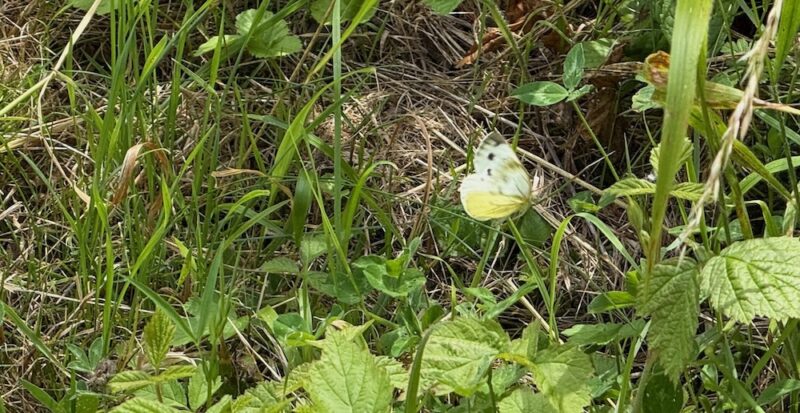
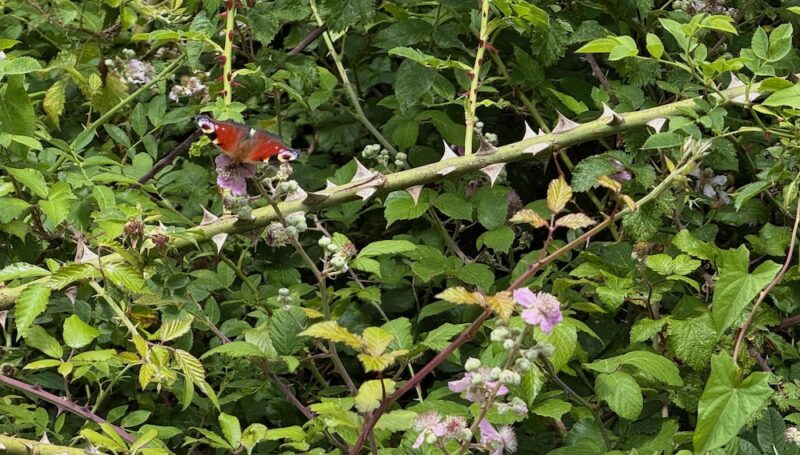
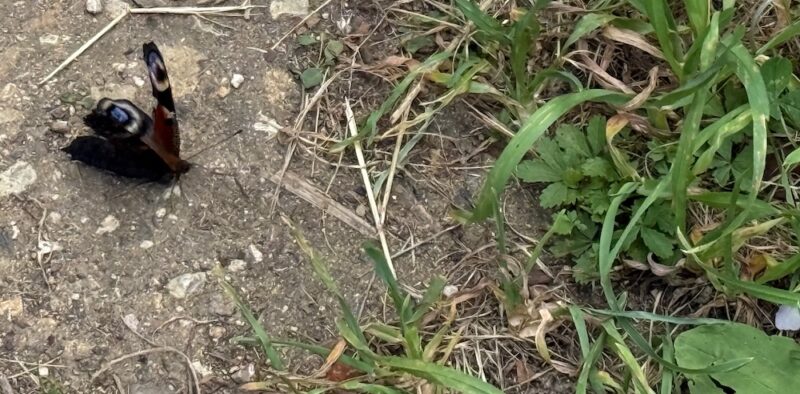
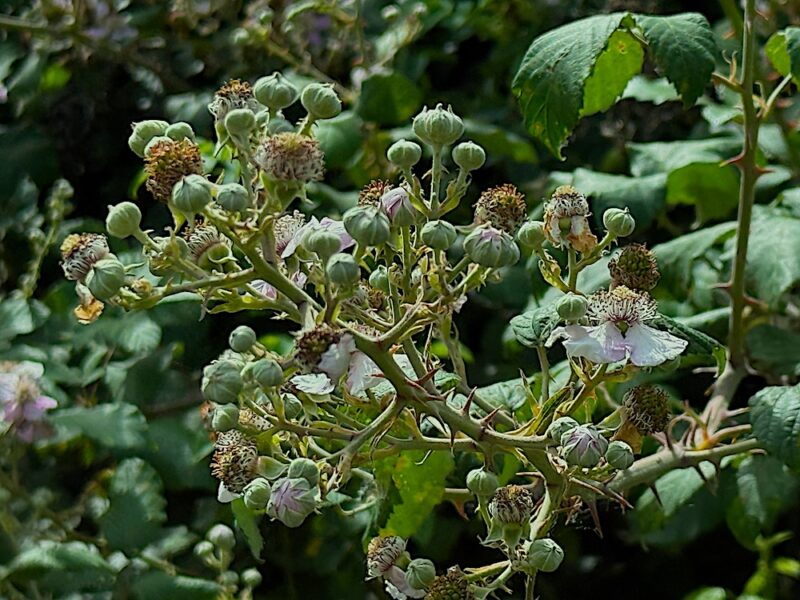
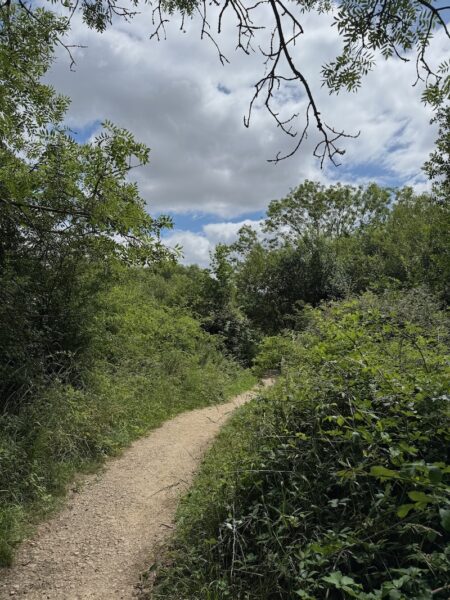
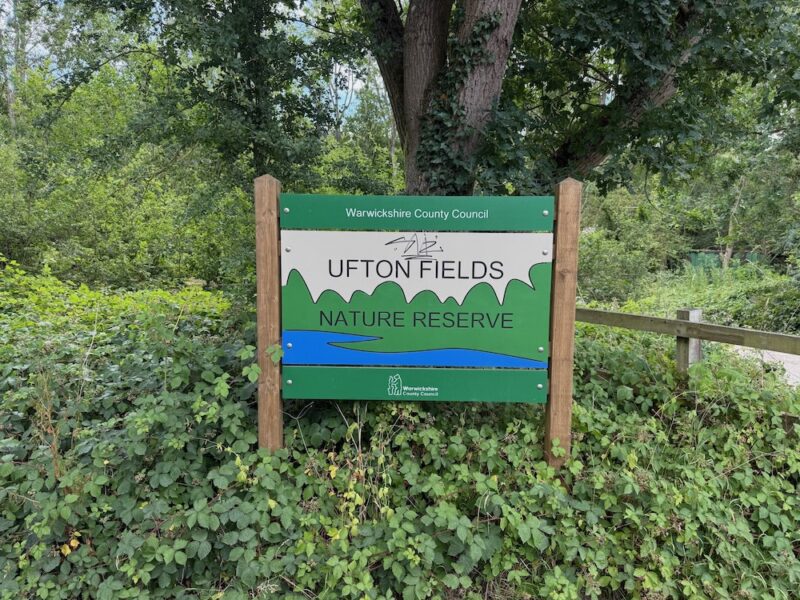
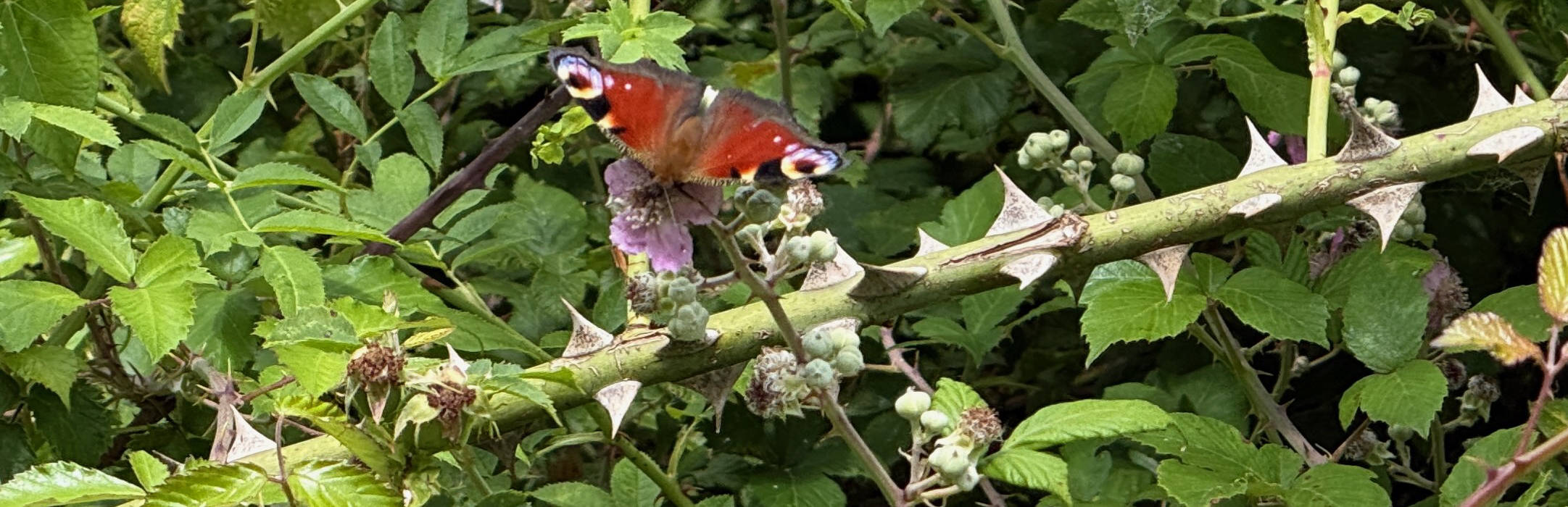
This is not a place to visit if you’re after some amazing countryside views as you’re under the canopy of the numerous tree species for much of the trail. However, you’re far enough away from the nearest main road to be able to hear the breeze filtering through the trees, the different bird species and the natural sounds of the countryside. It really is a lovely peaceful place to be and the grassland dotted around the site is a most pleasant place to enjoy your picnic.
Ufton Fields has a wonderful array of different habitats including pools, marshes, grassland and woodland. A circular, waymarked trail provides excellent access to all this fantastic reserve has to offer. Look out for feature points and see what you can discover about this special place and its wildlife.
The site was originally quarried for White Lias Limestone in the 1950’s. Once the land became redundant fast growing, non-native trees were planted and then the area was left to nature to do its best. And best it did – I have never seen so many butterflies in one place as I did during this activation. I’m guessing that this was the state of the countryside country-wide until farming was upended during World War 2, but it was so nice to see.
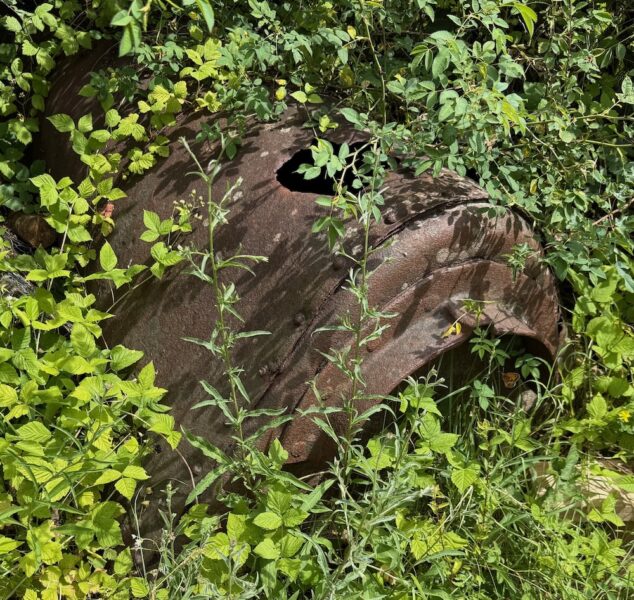
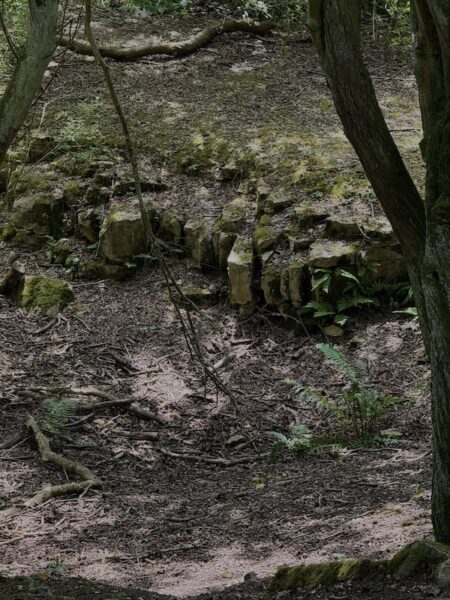
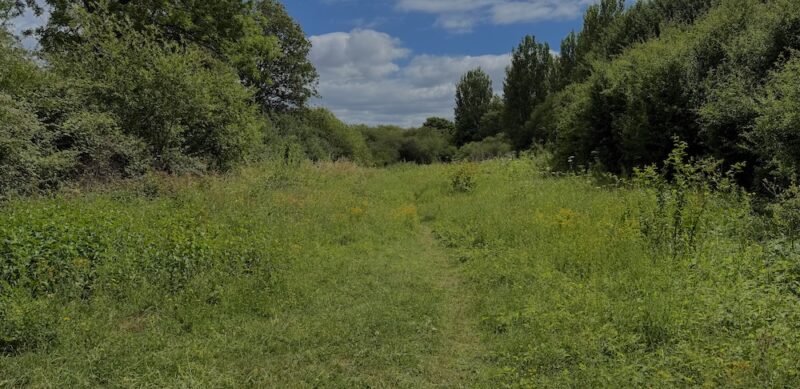
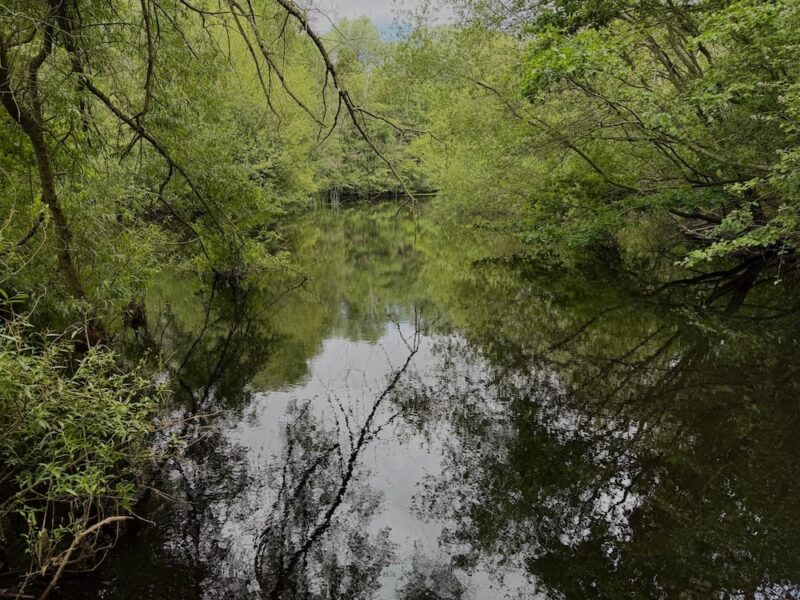

Located at various points throughout the site are ponds, formed between the low slag heaps from the quarry, where toads, newts, dragonflies and damselflie abound.
Plants really benefit from the lime rich soil that sits on the floor of the nature reserve and Ufton Fields Nature Reserve is the most northerly location in the UK where the rare Man Orchid can be found.
The Great Spotted Woodpecker reputedly habitats in the nature reserve, but sadly I didn’t hear any evidence of there being anything there on the day I visited.
In 1972 the area was declared as a Site of Special Scientific Interest (SSSI) and gifted to Warwickshire County Council. This is a testament as to how nature can take what man has once destroyed and return it to a lively natural space.
POTA on the Go
A few days before the activation I came across the POTA on the Go app and installed it on my iPhone. Using this app I was able identify very sites that I could activate whilst visiting family in the vicinity. Unfortunately I quickly found that app is missing an important piece of information from each of the sites – whether the site can be activation in a vehicle, or not. So having used the app to identify a potential site I had to refer to the POTA website to obtain this missing info. I will be reviewing this app in the near feature, but this omission is already an issue for me that will hopefully be addressed soon.
Details of GB-6912 Activation
Callsign used
G7LFC
Weather conditions
Sunny intervals, about 24 Degrees C, with a moderate breeze.
Equipment used
Xiegu G90 with GZF-1 Desktop stand with cooling fan, DigiRig Mobile data interface, Ampro single-band antennas, 14″ Lenovo IdeaPad Flex 5 Core i7 with 16GB, EcoFlow RIVER 2 power station, KitBrix waterproof go-bag with an 8L Really Useful Box inside.
Software used
POTA on the Go app (iPhone), HAMRS Pro logbook, WSJT-X 3.0.1 64-bit datamodes software, BktTimeSync for time synchronisation, Microsoft Windows 11 and HamDeck Grid Distance Calculator.
This is the first time I’ve used the HamDeck Grid Distance Calculator. It’s very easy to use, well laid out and intuitive, and will handle different type of location identification.
Bands, modes and power used
30, 20, and 15m using 10w of FT8.
Station setup
The station was setup inside the back of the van, using an Ecoflow power station as the power source and an Ampro single band antenna mounted on top using a three-way mag-mount. I do find the Xiegu gets a bit warm transmitting FT8 at 15w, so I do use the desktop stand with a built in fan. For this sort of activation, the laptop won’t run out of charge as it usually has about single-charge run life of between four and six hours.
How did the activation go?
Having chosen GB-6912 as the site for day I headed off. Usefully, the app does have a ‘Navigate to’ option and it does use Apple Maps – some apps I’ve used on my iPhone try and load Google Maps in the web browser, even on an Apple product.
Once at the site I decided to walk the boundary path. This took about thirty-five minutes, was flat and easy to follow using the coloured posts. The thing I will remember about this activation is the number, and variety, of butterflies I came across on the walk.
Back at the van the equipment was prepared and set up and operating started at 13:00 (local). It wasn’t the easiest activation unfortunately. I think the combination of operating QRP surrounded by trees full of sap and solar conditions conspired against me. However, I did manage fourteen contacts, but had to resort to 30m at one point as I was not confident that I’d make the required ten contacts without doing so. That’s not something I would normally contemplate at this time of the day. Contacts above 15m appeared non existent, 15m itself was short of plentiful contacts and 20m seemed deader than normal. This is all despite the WWA Sprint event being on, I thought I’d have no shortage of contacts earlier in the week.
Anyway, I needn’t have worried as fourteen stations were worked in the end but it did take nearly an hour and three-quarters, mainly on the near continent.
Notable contacts
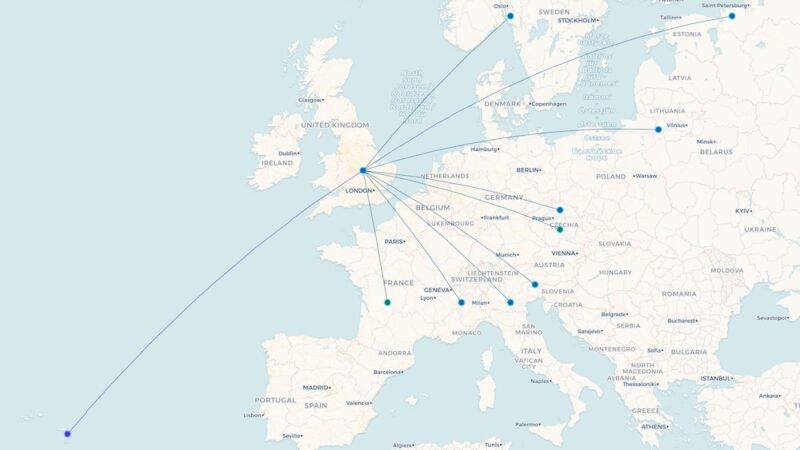
Best DX was CR2WWA located in HM77 down on the Canary Islands at around 1,500 miles. R1FW wasn’t far behind at about 1,250 miles into KO49 in North West Russia. I did work a few WWA stations too.
Pros and cons
Operating in densely populated wooded areas comes with its own issues. Whilst most would say that the trees in full foliage only attenuate VHF/UHF signals and above, my experience when operating from wooded areas on HF, have always show a slower operating rate and a struggle to make the required contacts. However, that’s the challenge for POTA operators, so it’s just got to be accepted.
Aside from that, I spent a good part of the afternoon at this site and thoroughly enjoyed it.
Observations and lessons learned
Looking back now, there was an earth-directed Coronal Mass Ejection (CME) from the sun and an X-class flare the day before the activation (4th July). The effects of the resulting minor to strong geomagnetic storm these solar events caused were still being felt well into daytime hours of the 5th July. This type of solar activity causes fluctuations in the ionosphere that lead to unpredictable signal absorption and lower Maximum Usable Frequencies (MUF) than might be otherwise expected.
Other than that, nothing out of the ordinary to report other than a very pleasant time spent at this location.
GB-6912 Map & Logbook
| CALL | DATE | TIME | FREQ | BAND | MODE | RST Tx | RST Rx | LOC |
|---|---|---|---|---|---|---|---|---|
| II3WWA | 20260704 | 120016 | 14.075221 | 20m | FT8 | +17 | -14 | |
| IN3BFW | 20260704 | 120200 | 14.0742 | 20m | FT8 | +13 | +02 | JN55 |
| R1FW | 20260704 | 120930 | 14.074787 | 20m | FT8 | +07 | -13 | KO49 |
| CR2WWA | 20260704 | 121915 | 21.07438 | 15m | FT8 | +29 | -06 | HM77 |
| CS2WWA | 20260704 | 122345 | 21.075068 | 15m | FT8 | +11 | -19 | |
| II1WWA | 20260704 | 124145 | 14.075221 | 20m | FT8 | +05 | -24 | JN35 |
| LA1HW | 20260704 | 125015 | 14.074696 | 20m | FT8 | -08 | -21 | JO59 |
| S56KO | 20260704 | 125145 | 14.07483 | 20m | FT8 | -08 | -09 | JN66 |
| SP4MPH | 20260704 | 125500 | 14.074446 | 20m | FT8 | +03 | -21 | KO14 |
| OK5AW | 20260704 | 130200 | 14.074841 | 20m | FT8 | -05 | -16 | JO70 |
| G3TKT | 20260704 | 130330 | 14.074484 | 20m | FT8 | +20 | +19 | IO92 |
| OK2ZU | 20260704 | 132715 | 10.136665 | 30m | FT8 | -02 | -10 | JN79 |
| F4JSZ | 20260704 | 132911 | 10.136854 | 30m | FT8 | -09 | +02 | JN05 |
| IU3VHR | 20260704 | 133730 | 14.074635 | 20m | FT8 | +16 | -21 | JN55 |