
Jump to GB-0264 Cornwall AONB Details of Activation and Logbook.
This was the first of my five activations of sites of historic communication history in Cornwall – each one of them conveniently located in an official Parks on the Air (POTA) or UK Bunkers on the Air (UKBOTA) location:
- 09/08/2026 – GB-0264 Lizard Wireless Station
- 10/08/2026 – GB-0264 Wireless Point
- 13/08/2026 – GB-5932 Marconi Monument, Grounds and Centre at Poldhu
- 13/08/2026 – GB-0668 Goonhilly Earth Station
- 15/08/2026 – B/G-1507 Porthcurno Telegraph Station
Cornwall Area of Outstanding Natural Beauty (AONB) section 8
The Cornwall Area of Outstanding Natural Beauty (ANOB), otherwise known as the Cornwall National Landscape, covers a large part of the Cornish coast and most, if not all, of Bodmin Moor. Given that the coast is in excess of 400 miles long and Bodmin Moor covers an area of about eighty square miles, this is one large area to manage. As a result, the ANOB is split into twelve sections. The Lizard Wireless Station is located in Section 8, South Coast Western, which covers from Marazion (near St. Michaels Mount) to the western fringes of Falmouth.
Section 8 encompasses all of the Lizard Peninsula, and Helford River and its network of secluded creeks. The western coast of the peninsula sees large areas of farmland meet with tall granite cliffs. As you get further south, that farmland gives way to wild heathland on serpentine rock. The eastern side of the peninsula sports quaint fishing villages whilst north eastern corner is a gorgeously relaxing area centred around the Helford River.
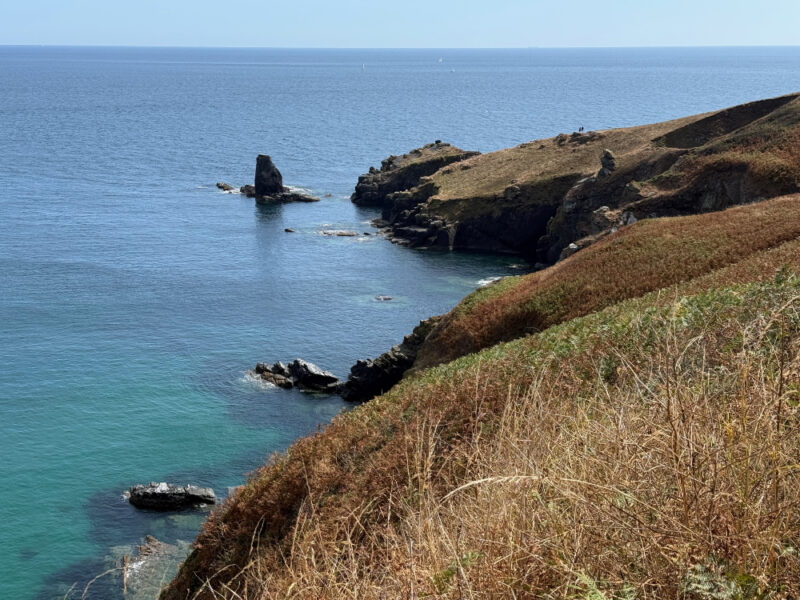
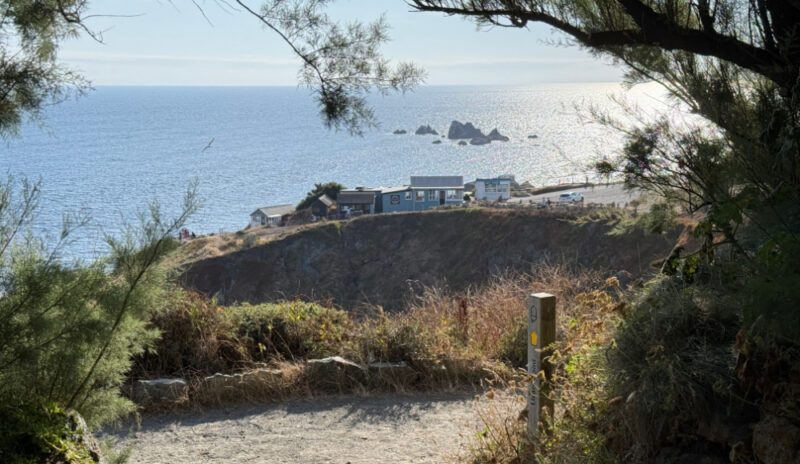
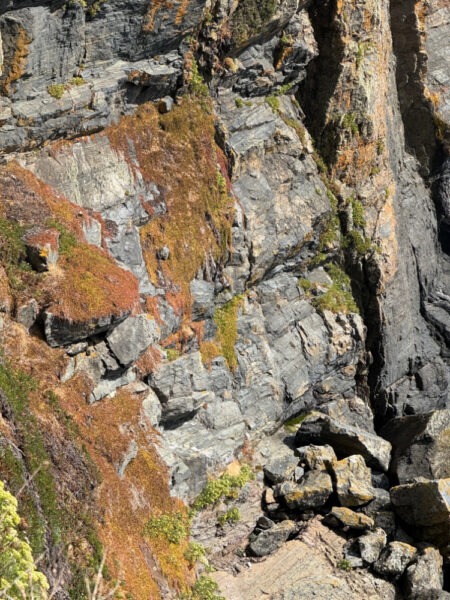
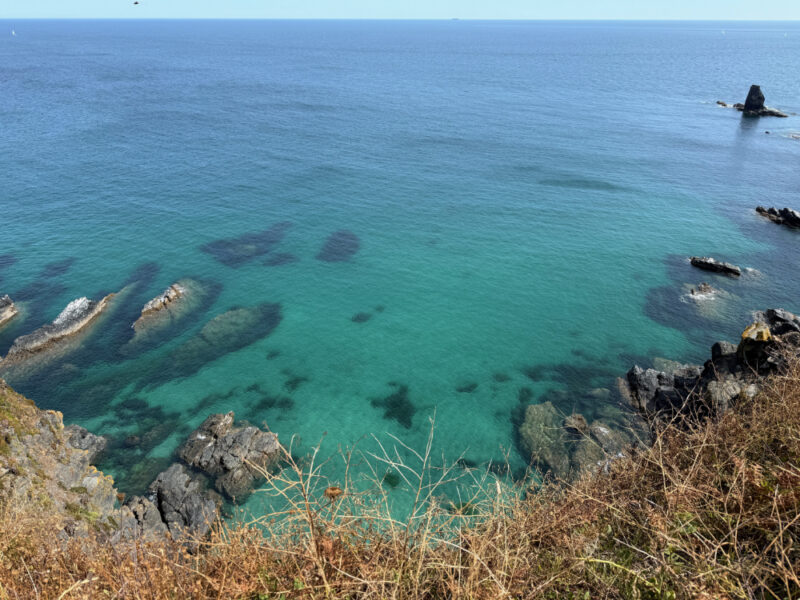
There are many places worth a visit on the Lizard Peninsula. These include the RNAS Culdrose viewing area where you can see Royal Navy pilots operating the latest cutting edge aircraft, and Porthleven with its elongated harbour and famous Fisherman’s Institute building over which many a huge wave has crashed. Then it’s down the coast to Poldhu with its really popular beach. Mullion is a small village on the western coast, just outside of which you will find the Chocolate Factory – a must for every chocoholic. Kynance Cove is next, rated next to Porthcurno as one of the best beaches in the country, though it’s a bit too popular for me. Of course, the most southerly point of the mainland lies at Lizard Point where the excellent Wavecrest Cafe is a required visit. Around the coast we come to the famous Cadgwith Cove, a working fishing village with a great eatery. Then it’s on to Coverack, another little fishing village which hosts an excellent Lifeboat Day if you’re around and then the Geer Farm Pasty Company nestles amongst the creeks of the Helford River in St Martin – the pasties are to die for, easily the best in Cornwall. There’s so much to see and do in such a small area.
Of course, the area also has a long history in communications of all forms. There’s the Lloyds Signal Station that was handling ship-to-shore communications using semaphore as long ago as the 1860s. Then there are the Marconi sites at Poldhu and Lizard were linked with the development of wireless radio communications. And finally, there is the ground-breaking satellite earth station at Goonhilly.
Lloyds Signal Station
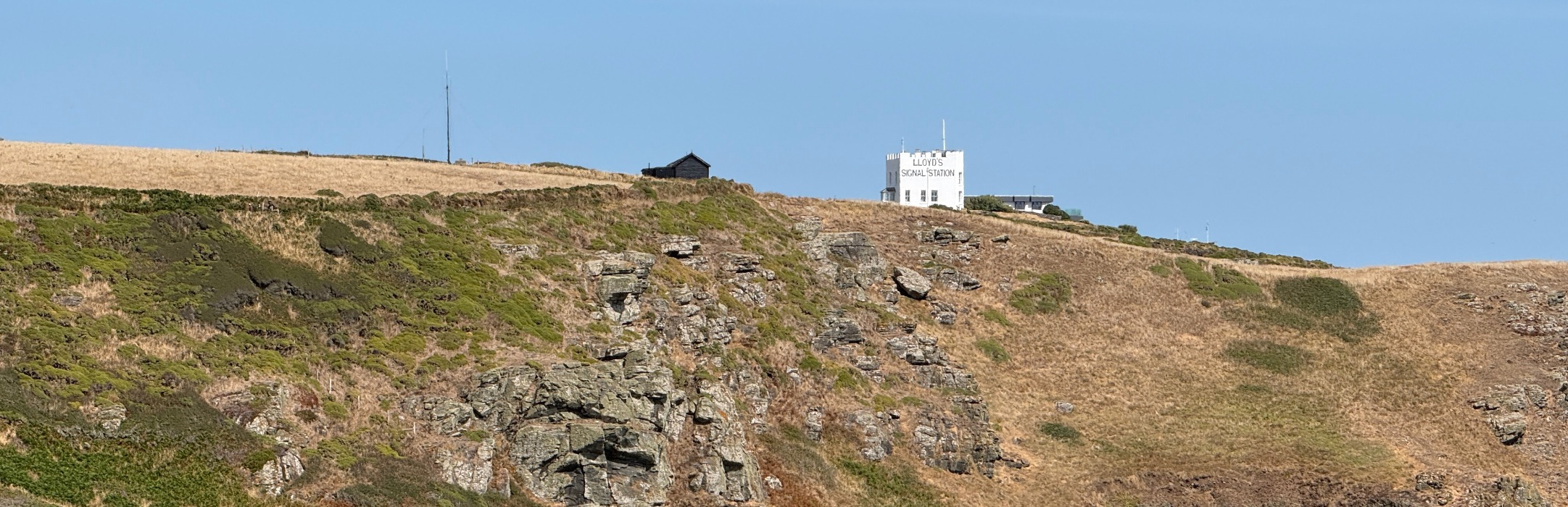
At the southern tip of the peninsula is the small village of Lizard. About a mile east, around the coast, is located the Lloyds Signal Station. It’s a large white castellated building sitting right on top of the cliffs – visible for miles around if the weather is good. And this was the point of the station, to be seen by ships out at sea. It was built in 1867 and is located near the entry to the English Channel. Its owners, Fox and Company shipping agents, would communicate with ships entering the channel using semaphore (using flags). Ships would receive important information such as market conditions and berthing details, but would also be able to send details of cargos being carried so that the ship owners could sell them before they docked. The station was connected to London using telegraph to get the message there in almost an instant – previously horse and riders carried the information and this would take days.
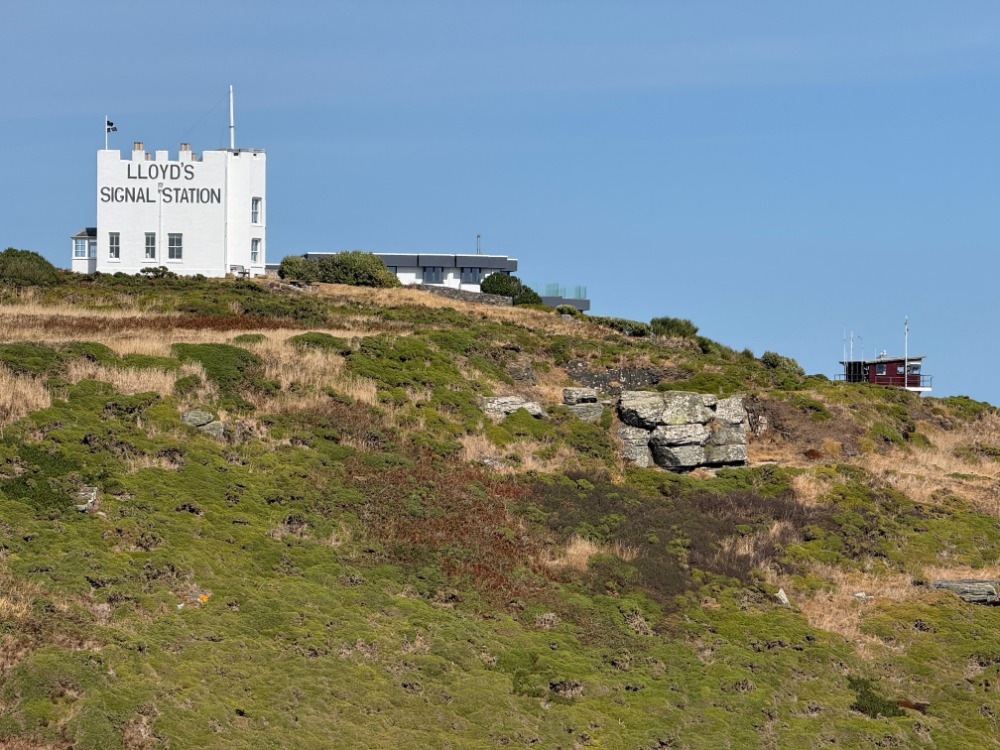
In 1883 Lloyds of London took over operation of the station.
Lizard Wireless Station
Months before he achieved the breaching of the Atlantic Ocean with wireless radio signals, Marconi was working at some wooden huts close to the Lloyds Signal Station. There, he successfully received a wireless a transmission from the Isle of Wight. It was over 180 miles away from the huts which was a great achievement in its own right, but it also proved that wireless radio signals could be received from transmitters that were located beyond the horizon. This had been thought by many to be impossible, believing that wireless would only work on line of sight transmission paths.
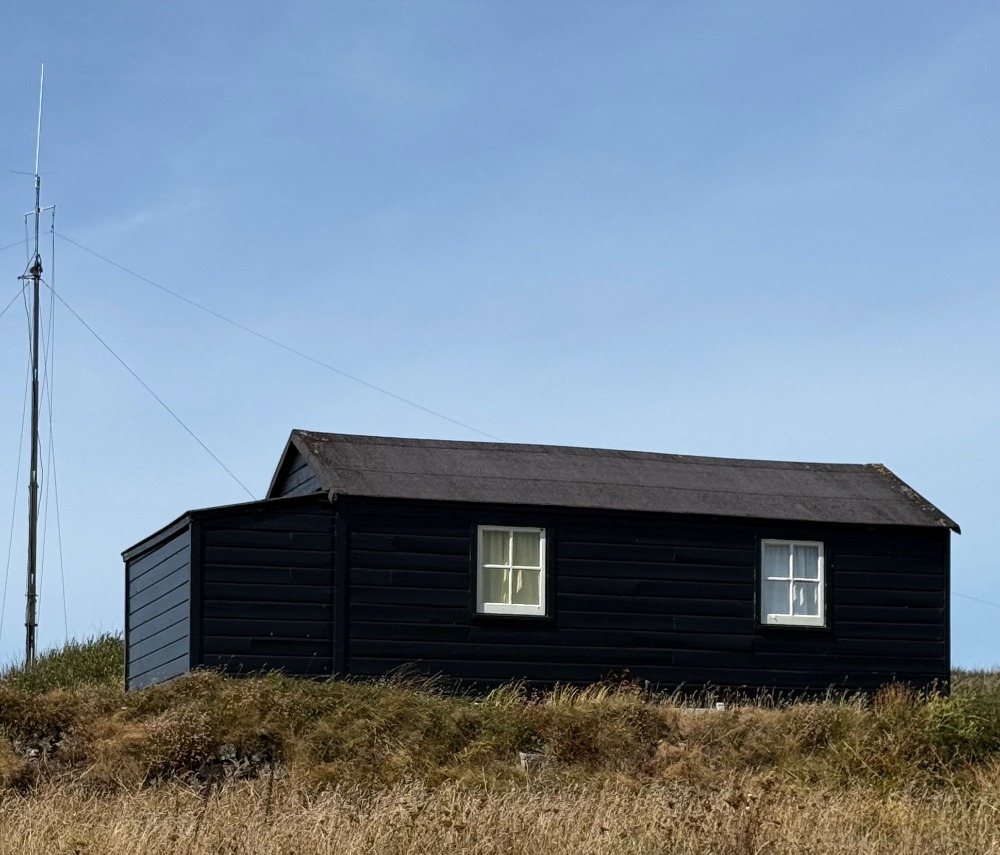
With the Poldhu station being located just six miles up the coast, Marconi was able to fine tune his equipment to achieve tuning that would allow more than one station to transmit at the same time and be received by different stations. he also experimented with interference filtering.
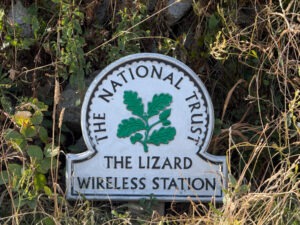
Having seen the success of the nearby Lloyds Signal Station, Marconi’s experimenting huts were turned in a coastal radio station for shipping and the Lizard Wireless Station was born. The station was able to communicate with ships, equipped with his radio equipment, beyond the visual range of the Lloyds Signal Station, both over the horizon and closer inshore in poor weather conditions. The Lizard Wireless Station was to go on to be one of a dozen coastal UK stations which handled ship-to-shore communications. Famously, it was the first coastal radio station to receive an SOS call in 1910 when a ship ran aground off the Isles of Scilly.
The Lloyds Signal Station soldiered on and, surprisingly, ceased to operate as late as 1969. By that time, mind, Lizard Wireless Station had also closed. It was replaced by a new station at Lands End in 1913, but it was reactivated for war-time duties between 1914 and 1918 and finally closed its doors in 1920.
This year marks 125 years since Lizard Wireless Station was founded. Today it is owned by the National Trust and they continue to tell the story of radio there with practical demonstrations.
Details of my GB-0264 (Lizard Wireless Station) Activation
Callsign used
G7LFC
Date
9th August, 2026
Weather conditions
Sunny, 22 degrees temperature with a gentle to moderate breeze.
Equipment used
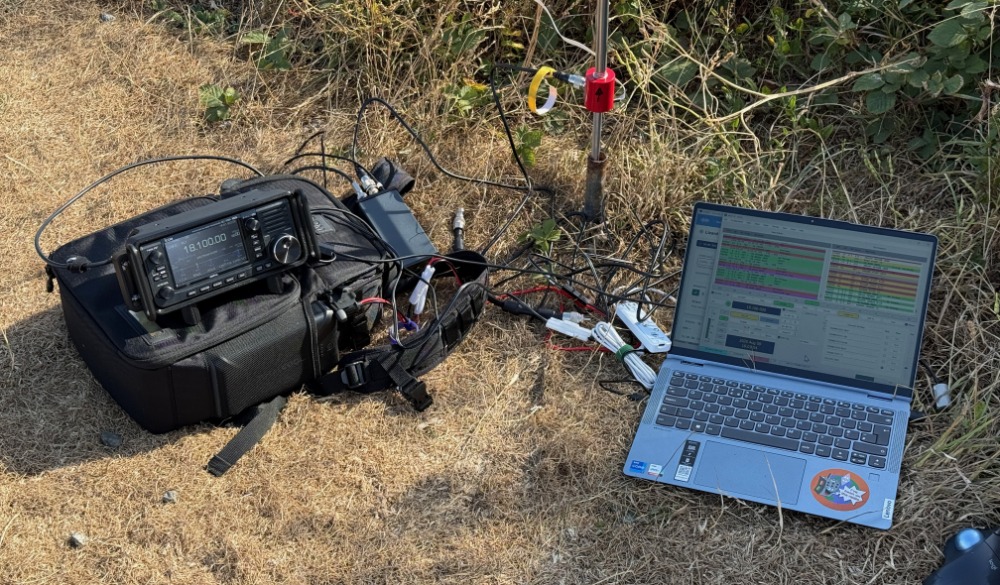
Icom IC-705, mAT-705 Antenna Tuner, Totalcool GP09 38,000mAh/144Wh power station (discontinued), Icom LC-192 back pack, cheap Chinese 5.6M/18.3 FT QRP Antenna, 14″ Lenovo IdeaPad Flex 5 Core i7 with 16GB and a KitBrix KitMat.
Software used
HAMRS Pro logbook, WSJT-X 3.0.1 64-bit datamodes software, BktTimeSync for time synchronisation, Microsoft Windows 11 and HamDeck Grid Distance Calculator.
Bands, modes and power used
20m and 17m using 5w of FT8.
Station setup
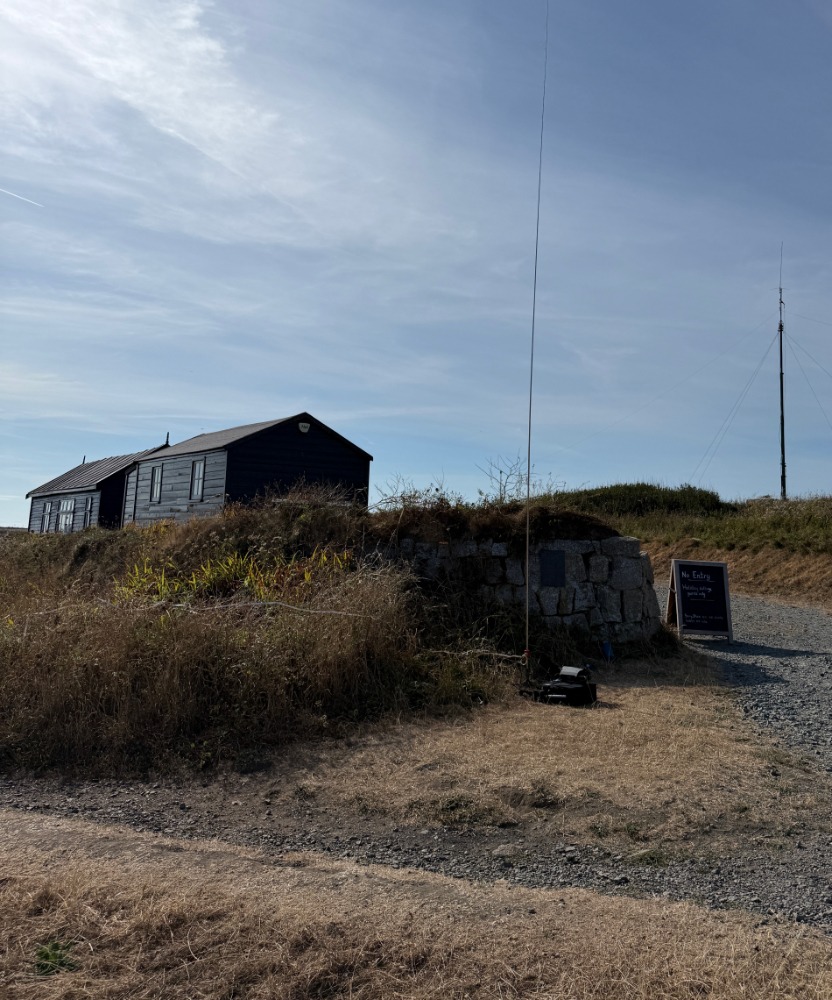
The station was setup on a small triangle of ground at the entrance to the Lizard Wireless Station. Space was at a premium so the antenna base spike was fully inserted in the dry ground and all eight counterpoise wires were laid in a westerly direction from the antenna.
Notable contacts
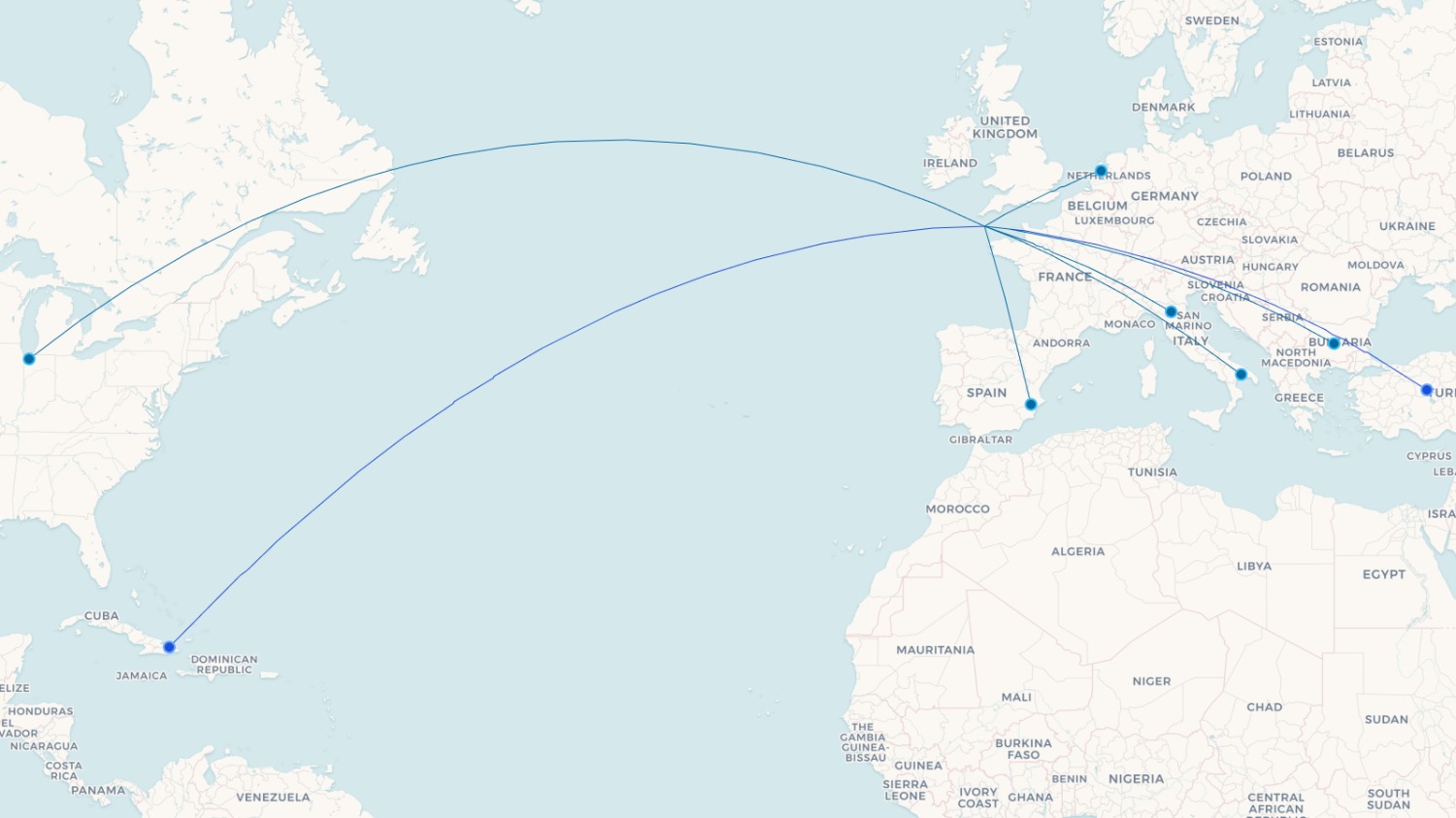
Three continents were worked and included contacts in to the US and Cuba (North America) and Turkey (Asia). The rest of the contacts were made with European stations.
How did the activation of GB-0264 Cornwall ANOB (Lizard Wireless Station) go?
The activation was started by parking the van up at the National Trust car park adjacent to the Lizard Lighthouse. We are National Trust members, but only for the free parking it affords us and we use them quite a lot whilst we are out and about on our travels.
From there, it is s a short walk down to the South West Coast Path. However, before turning left and heading east towards the wireless station we turned right and headed down to Lizard Point. One of the wildlife of note that we observed was the Cornish Chuff with its distinctive red beak and legs. This is an ecological success story as they were extinct from Cornwall for several years, so it’s worth keeping a lookout for them.
Once at the point don’t forget to take a photograph of yourself – it’s kinda the law amongst tourists apparently – not that there’s any Lands End like sign post or anything. From there we headed up to our favourite eatery in the country, the Wavecrest Cafe. There is nothing like sitting outside on the wall, eating fantastic food, on a gloriously sunny day overlooking the English Channel and Atlantic Ocean – next stop the Falkland Islands.
Suitable fed and relaxed Ali, my long-suffering wife, headed back to the car to do some painting whilst I headed east to the wireless station. The path is easy enough, though not for those with any kind of mobility issues. It’s narrow and uneven and these is a steep drop into a valley at Hounsel Bay. There’s a path that leads from the beach in the cove up to the Hounsel Bay Hotel – Marconi stayed here when he was looking for a location to establish his wireless station. However, we continue up the steep coastal path out of the valley and around the headland to the wireless station.
On this particular visit I was treated to a display of birds of prey hunting, catching and flying off on a continual cycle. It is was a sight to behold.
In have activated this location previously and set up the station on the spacious headland in front of the station, on the seaward side of the coastal path. I didn’t this time because the overgrown vegetation was already parched and dry from the many heatwaves Britain has endured this summer and I didn’t want to damage it any further by trampling all over it. It would have also been very prickly to sit on, so I gave it a miss.
There was sign at the entrance to the walled grounds of the wireless station saying no entrance as there were guests staying in one of the huts. The National Trust hire out the most westerly hut for self-accommodation stays, whilst the easterly hut is open to the public at various times during the week. I would have set up inside the wall had the sign not been there, but there it was.
As a result, I set up on a tiny triangle of short grass next to the gate. There was just enough space for everything and the counterpoise wires of the antenna were all laid along the wall in the same westerly direction from the antenna. This is a busy path so health and safety is important.
It took about fifty minutes to work the required ten stations for the POTA activation and I was really pleased with the Cuban and US stations.
Pros and cons
GB-0264 Cornwall AONB (Lizard Wireless Station) is a relatively easy POTA site to activate – the short walk is part of the fun. I always feel recharged when walking the coastal path along these rugged coastlines in Cornwall. I think it actually benefits my mental health. I’d have stayed longer, but I was aware I was on holiday with my long-suffering wife and didn’t think it fair to leave her on her own for tool long.
Observations and lessons learned
It never ceases to amaze me how small a space you can fit an amateur radio station in and make real DX contacts. Other than that, there is nothing of real note to mention about this activation.
GB-0264 (Lizard Wireless Station) Map & Logbook
| Callsign | Date | Time | Band | Mode | RST Tx | RST Rx | Locator | Power |
|---|---|---|---|---|---|---|---|---|
| IK4LZH | 20260809 | 150845 | 20m | FT8 | +15 | -01 | JN54 | 5 |
| LZ1ZF | 20260809 | 151045 | 20m | FT8 | +02 | -10 | KN22 | 5 |
| IZ7QDZ | 20260809 | 151615 | 20m | FT8 | +01 | -10 | JN80 | 5 |
| EA5JYL | 20260809 | 151715 | 20m | FT8 | -03 | -11 | IM98 | 5 |
| EA5QS | 20260809 | 153200 | 17m | FT8 | +17 | -14 | IM98 | 5 |
| CO8LY | 20260809 | 153330 | 17m | FT8 | +03 | -16 | FL20 | 5 |
| CR60A | 20260809 | 153715 | 17m | FT8 | +01 | -17 | 5 | |
| PD1HPB | 20260809 | 154715 | 20m | FT8 | -07 | -22 | JO22 | 5 |
| N2BJ | 20260809 | 155700 | 20m | FT8 | -04 | -20 | EN61 | 5 |
| TA2ANK | 20260809 | 160000 | 17m | FT8 | +11 | -12 | KM69 | 5 |