
Jump to GB-0264 Cornwall AONB Details of Activation and Logbook.
This was the second of my five activations of sites of historic communication history in Cornwall – each one of them conveniently located in an official Parks on the Air (POTA) or UK Bunkers on the Air (UKBOTA) location:
- 09/08/2026 – GB-0264 Lizard Wireless Station
- 10/08/2026 – GB-0264 Wireless Point
- 13/08/2026 – GB-5932 Marconi Monument, Grounds and Centre at Poldhu
- 13/08/2026 – GB-0668 Goonhilly Earth Station
- 15/08/2026 – B/G-1507 Porthcurno Telegraph Station
Cornwall Area of Outstanding Natural Beauty (AONB) section 7
The Cornwall Area of Outstanding Natural Beauty (ANOB), otherwise known as the Cornwall National Landscape, covers a large part of the Cornish coast and most, if not all, of Bodmin Moor. Given that the coast is in excess of 400 miles long and Bodmin Moor covers an area of about eighty square miles, this is one large area to manage. As a result, the ANOB is split into twelve sections. Wireless Point is in Section 7, West Penwith which covers from just west of St. Ives, anti-clockwise, to Penlee. It covers the coast around the most south westerly part of mainland Britain and the West Penwith Moors.
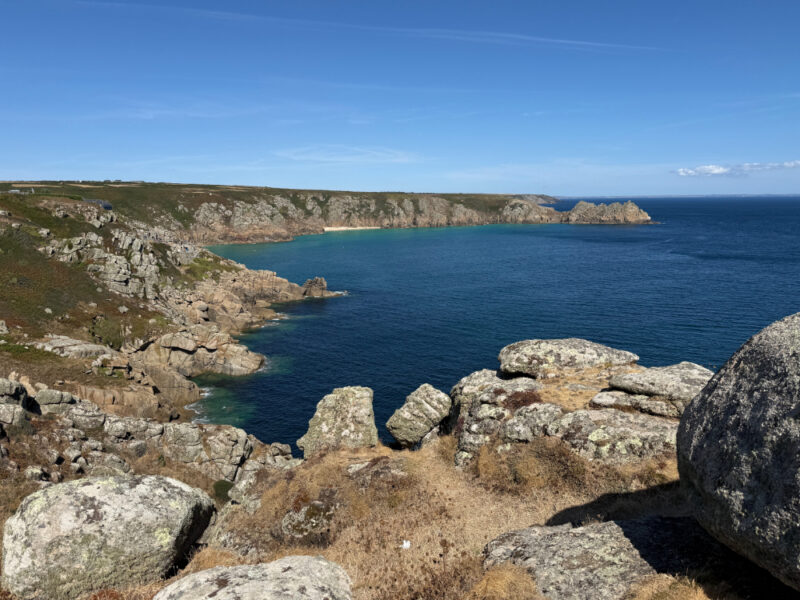
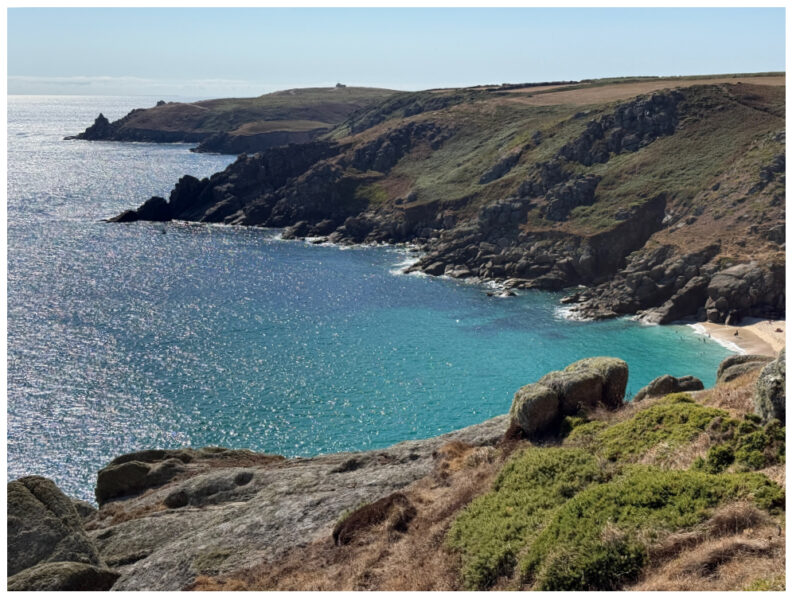
The West Penwith coast is characterised by its steep hard granite cliffs. It is also known for some of the most famous beaches in England; namely Sennen and Porthcurno. The area is also renowned for some of the most amazing sunsets you will ever see. Lands End is the meeting point for the Atlantic Ocean and English Channel and the weather is very much governed by what’s out over the horizon, west of Cornwall. Some of the worst Atlantic storms make landfall here first.
The area is littered with history. There are lots of neolithic relics, standing stones from the Bronze Age, Roman remains and Iron Age cliff castles. Then there are the numerous remains of mining with many romantic wheel houses in various states of decay to be found all over the place. There’s even an almost completely intact tin mine that was one of the last to close as late as 1990. These mining areas are part of a world heritage site.
Those seeking wildlife will find nightjar, sharks, seals, dolphins and, if you’re lucky, the possibility of the odd Cornish Chough with its distinctive red beak. If space is your thing, then the West Penwith area was designated as an International Dark Space Sky Park in 2021.
This is, without doubt, my favourite part of the country.
Wireless Point
Wireless Point is located at Pedn-men-an-mere, about three quarters of a kilometre west of thew Minack Theatre, Porthcurno. It’s a rocky headland that sticks out into the sea and far enough south of Logan’s Rock to enable almost all of the length of the Lizard Peninsula to be seen from there.
It’s an unassuming place with little for the visitor to see apart from some splendid views of the adjacent cliffs running out towards Gwennap Head, a couple of clicks, or so, further west. However, there is a history to the place that many don’t know about, though there are hints on plaques carefully positioned by the National Trust.
In 1900 Marconi was over at Poldhu, across the water from Porthcurno, on the Lizard Peninsula and within sight of Wireless Point. He was experimenting with his new wangle-fangle wireless communication thing and the Eastern Telegraph Company started to get a bit jittery as to what it might mean to their business if he was actually successful. Cable communications, after all, could span the globe, but the big, heavy and very long cables were very expensive and it took a long time to lay them. Wireless communications, on the other hand, used the atmosphere to bridge transmitting and receiving stations and that was free. If he was successful, would that mean the end of cable communications?
Interestingly, the same debate was had during the sixties and seventies as satellite communications started to take off. Would this new medium replace cable communications?
It’s worth noting that, by the early 1900’s, Porthcurno (callsign/station identifier PK) was one of the most important places in the world, let alone Britain. So much traffic was routed through PK that it has since been labelled the hub of the Victorian Internet.
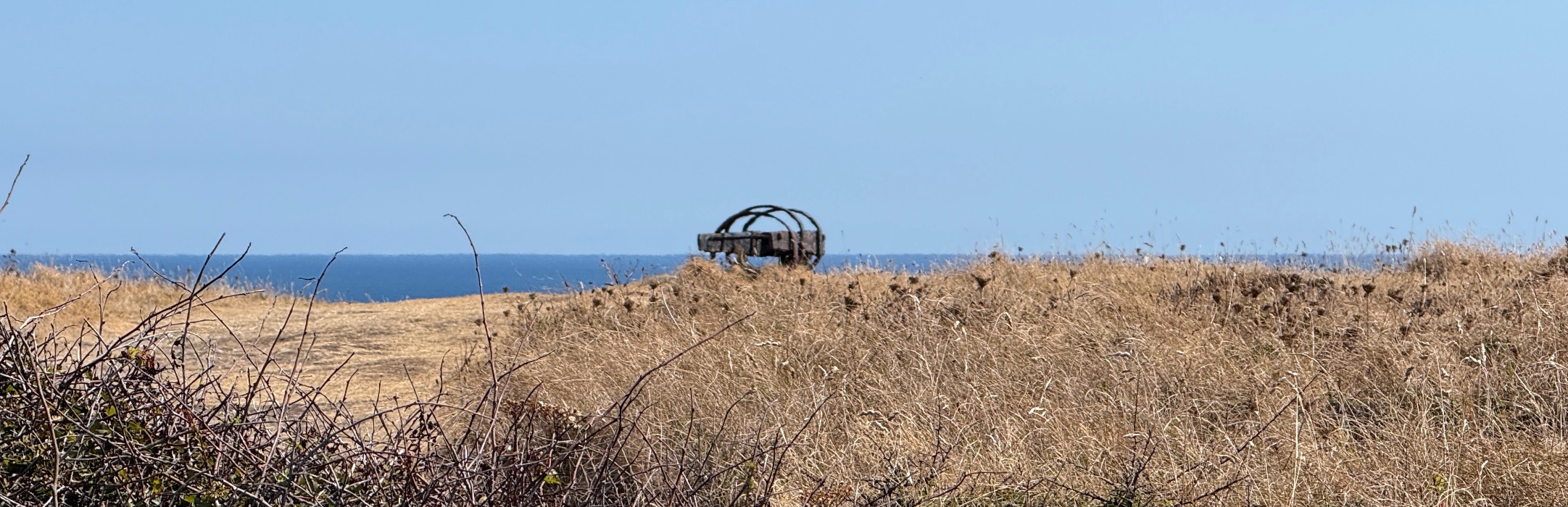
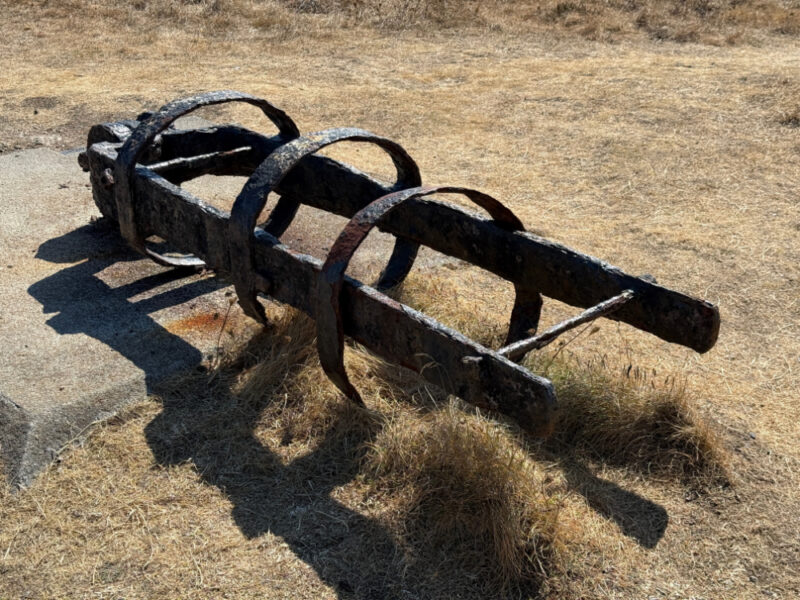
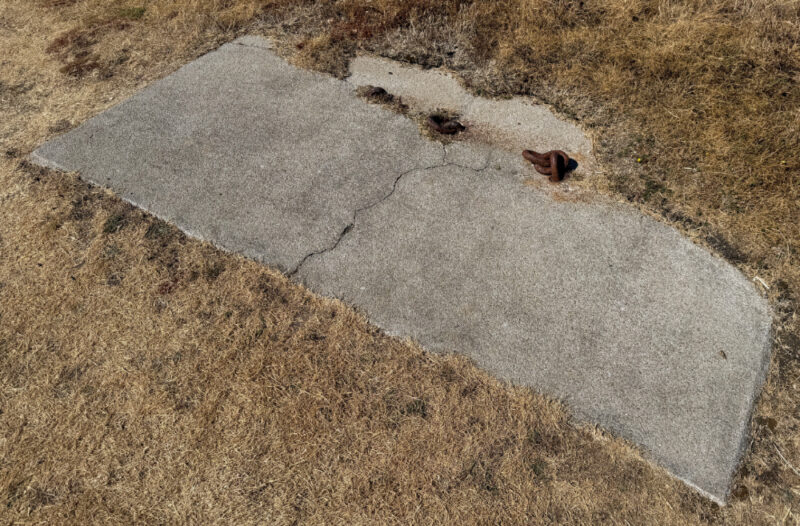
In January 1901, Marconi had succeeded in bridging the Atlantic Ocean and proven that wireless radio communication was a force to be reckoned with. The Eastern Telegraph Company was now seriously concerned and it’s directors purchased shares in Marconi’s business so that they could attend shareholder meetings to try and glean as much information as they could on developments, successes and failures. They also employed a rival wireless pioneer to Marconi, Nevil Maskelyne, for assistance. He requested that a 170ft wooden mast was erected on the cliff at Wireless Point to enable the staff at PK to ‘spy’ on Marconi’s activities over at Poldhu. The metal cage that you see lying on the ground at Wireless Point today, is the base of that very mast.
In fact, it is quite possible that the PK staff could claim to be the first hackers. There are reports that some of the communications emanating from the Poldhu station were intercepted and made public in a magazine for all to read. This highlighted one of the major flaws of radio communication that cable did not suffer from – security. Of course, in time this would be resolved, but then this would cause Marconi a headache as he was still trying to prove his system worked and in need of investment.
However, worse was to come. During a public demonstration of the wonders of wireless communication at Poldhu, PK staff are reported to have interfered with the live broadcast by broadcasting their own, reportedly, very rude messages at the same time. This might have caused Marconi much embarrassment and done little to encourage backers to invest their money in a system that was open to so much abuse.
As a result of this the Eastern Telegraph Company deemed that those who relied upon cable for communications would continue to do so, over radio, safe in the knowledge that their communications would be secure and free from interception and deliberate interference. Radio was no threat to the cable communications business. Ironically, having seen some of the advantages that radio did have over cable, the cable company started to use the site at Wireless Point to communicate with the Isles of Scilly and its own cable ships within range of the station – after all, you can’t lay a cable to a moving ship.
As we now know, wireless radio communication did succeed and not only developed to include voice transmissions, but also moving image communications too – television. Today both cable and wireless communication continue to advance technologically and both have their have their own advantages and disadvantages. And don’t forget that new method of communicating that emerged in the middle of the twentieth century. Technically, it was still wireless radio communication, but instead of relying on the atmosphere as the medium for transferring information, it used satellites out in space. No, it didn’t supplant cable communications, just like radio didn’t – modern fibre optic cables still carry the vast majority of information transferred around the world.
Details of my GB-0264 (Wireless Point) Activation
Callsign used
G7LFC
Date
10th August, 2026
Weather conditions
Sunny, low twenties temperature with a gentle breeze.
Equipment used
Icom IC-705, mAT-705 Antenna Tuner, Totalcool GP09 38,000mAh/144Wh power station (discontinued), Icom LC-192 back pack, cheap Chinese 5.6M/18.3 FT QRP Antenna, 14″ Lenovo IdeaPad Flex 5 Core i7 with 16GB and a KitBrix KitMat.
Software used
HAMRS Pro logbook, WSJT-X 3.0.1 64-bit datamodes software, BktTimeSync for time synchronisation, Microsoft Windows 11 and HamDeck Grid Distance Calculator.
Bands, modes and power used
17m and 15m using 5w of FT8.
Station setup
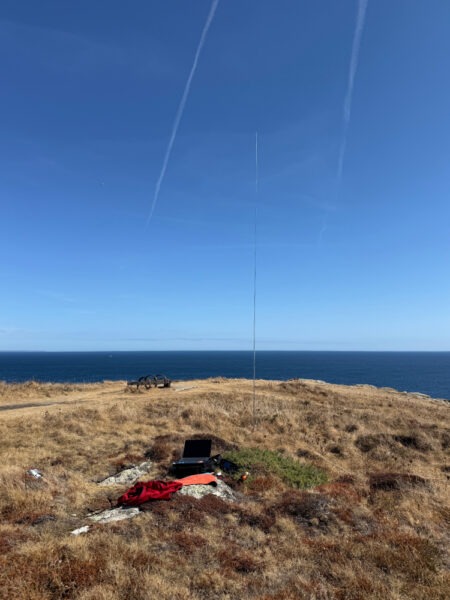
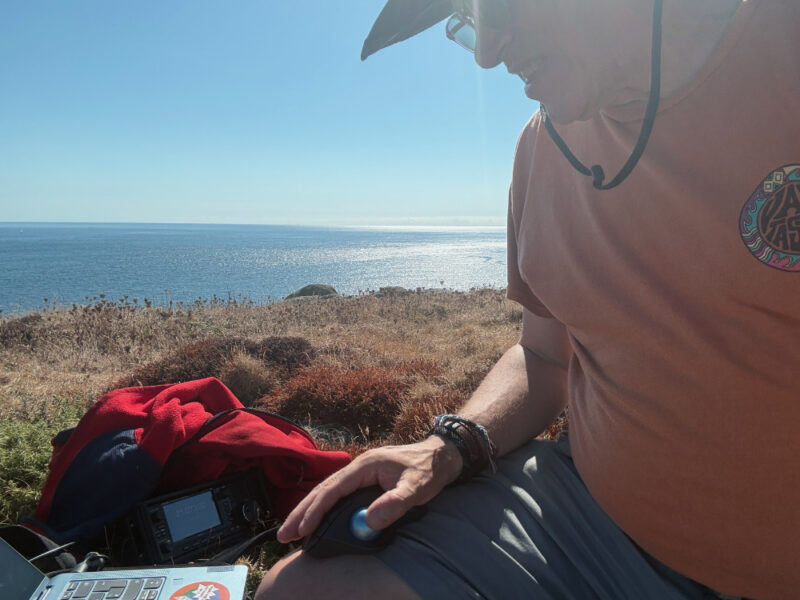
The station was setup on a granite rock near to the iron cage that formed the base of the Eastern Telegraph’s mast at Wireless Point. The antenna base spike was fully inserted in the dry heath and the eight counterpoise wires split into groups of three and positioned evenly at 120 degrees bench around the mast. The KitMat is thin, but it really did a grand job of softening that rock.
Notable contacts
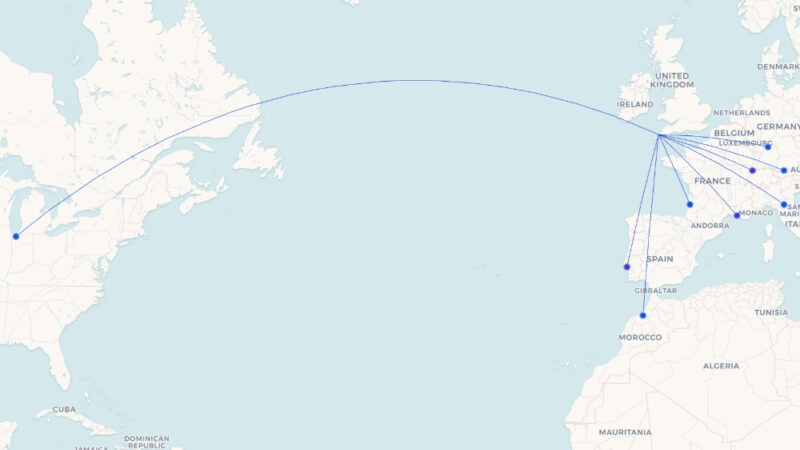
Three continents were worked and included contacts in to the US (North America) and Morocco (Africa). The rest of the contacts were made with European stations.
How did the activation of GB-0264 Cornwall ANOB (Wireless Point) go?
It was a gorgeous day in Cornwall and was just begging for me to go on a walk. Unfortunately the walk I had planned was not going to make me any fitter, healthier, or thinner, as it was just about three quarters of a Kilometre east of the world famous Minack Theatre – a theatre carved into the cliff making for many a dramatic performance to be enjoyed overlooking sea.
I started my walk at the Porthcurno Museum of Global Communications. There are three ways to get up to The Minack Theatre from there; over the beach and along a cliff-side path, up the steep road, or along a footpath that starts between Godrevy The Old Hotel and Seaview House on the western side of the road running down the valley. The latter is the one I chose as it’s nice and gentle and you get to see the old homestead of Rospletha, otherwise invisible from the road.

From there I made my way towards the main road up to the theatre and then along the private towards its entrance. Just after the car parks there is a hut that sells snacks and ice creams, behind which is the coastal path that takes you west towards Lands End. I followed this path for around half a click before the distance between the path and the sea starts to widen – this is Pedn-men-an-mere. Taking a fork in the path on the left I left the coastal path and made my way on to the headland.
Once at the iron cradle that formed the base of the Eastern Telegraph Company’s mast, I looked around to find the granite rock I used last time as my base for operations. Located, I started to set up the station. The antenna base spike was inserted into the ground and the counterpoise wires divided into three groups and spaced out around the attend at 120 degree intervals. I had to keep everything in the shade as much as possible as the black equipment was soaking up the heat like a sponge – at one point my iPhone was resting and begging to be cooled down before I could start using it.
The activation of GB-0264 went without a hitch and several people stopped to ask me what I was doing throughout it. Most seemed genuinely interested and informed. This area is really popular with climbers and whilst I was on the headland one of them asked what I was doing. When I started to explain the significance of the area I was operating from he seemed familiar with the history. He explained that some of the climbs off the headland had communications related names. There was Two Tins One String, Megaphone Chimney, Megaphoney, and, of course, Marconi Crack.
Pros and cons
This is a relatively easy activation, though do watch out for wind if you’re using a cheap Chinese telescopic antenna like I was. At 18′ long, that’s a lot of cheap metal to have flailing around in a moderate breeze. Fortunately, this activation was in a light breeze but with this piece of land sticking out into the sea, as it does, it can get quite windy. I am looking at more sturdy versions of what are basically the same antenna electrically – the issue I have is that the y cost more than five times what I paid for this antenna.
Also, be prepared to talk to people when activating this site. Folk are very inquisitive here, much more so that any other POTA site I’ve been to for some reason. I am thinking of putting together a small leaflet to give out to people for them to read when they get home – just reminded them what I’m doing and including a link if they want to take their interest further.
Observations and lessons learned
There’s nothing really to mention here as the activation was pretty straight forward. I think that, with all such activations of historic communications sites, it pays to know something about the place you’re operating from. Fortunately, I was station at PK in the early eighties as a Radio Officer, so I’ve kinda ‘grown up’ with this places and its legacy firmly ingrained in my brain.
GB-0264 (Wireless Point) Map & Logbook
| Callsign | Date | Time | Band | Mode | RST Tx | RST Rx | Locator | Power |
|---|---|---|---|---|---|---|---|---|
| N2BJ | 20260810 | 145545 | 17m | FT8 | -06 | -20 | EN61 | 5 |
| DL3MIB | 20260810 | 145645 | 17m | FT8 | -16 | -20 | JN57 | 5 |
| HB10GBT | 20260810 | 150130 | 17m | FT8 | +02 | -15 | 5 | |
| DK6IF | 20260810 | 150430 | 17m | FT8 | -10 | -19 | JN49 | 5 |
| F1IWH | 20260810 | 150715 | 17m | FT8 | +09 | +04 | IN94 | 5 |
| I4BUQ | 20260810 | 151100 | 17m | FT8 | +02 | -09 | JN54 | 5 |
| CN8NS | 20260810 | 151345 | 17m | FT8 | +00 | -13 | IM63 | 5 |
| F6BZQ | 20260810 | 151830 | 15m | FT8 | +20 | -10 | JN23 | 5 |
| HB3YDV | 20260810 | 152030 | 15m | FT8 | +03 | -08 | JN37 | 5 |
| CR7BRV | 20260810 | 152215 | 15m | FT8 | +12 | -06 | IM58 | 5 |